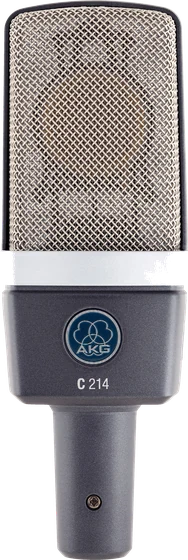
This vocal range test finds your voice range with your microphone: sing your lowest and your highest clear note and the page names them, shows how many semitones and octaves lie between them, and tells you which typical voice type your range is closest to, from bass and baritone to tenor, alto, mezzo-soprano and soprano. It also answers "what note am I singing?" live, with the note, its frequency and how many cents sharp or flat you are, on a piano keyboard. It runs in the browser with no app and no upload: the sound is analysed as you sing and never recorded. A note only counts for your range when you hold it steadily for about a third of a second, so a cough or a crack does not set a fake record. Below: how the pitch detection works, voice type ranges, how to find your lowest and highest notes safely, and how far to trust the result.
How does the vocal range test work?
Your voice repeats a pattern of air pressure many times a second; that rate is the pitch, measured in hertz. The page reads 4,096 samples from the microphone (about 85 milliseconds) every animation frame and finds the repeat rate with YIN, a pitch detection method published by de Cheveigne and Kawahara in 2002: it compares the sound with delayed copies of itself, normalises the differences and takes the first delay where the sound matches itself well, refined between samples. Our own implementation, tested on synthetic tones from 31 Hz to 1,047 Hz, lands within 2 cents of the true pitch (a cent is a hundredth of a semitone).
The frequency becomes a note with the standard tuning A4 = 440 Hz: note number = 69 + 12 x log2(frequency / 440), where 60 is middle C (C4). The page smooths the last five readings, and only counts a note towards your lowest or highest when it stays within 40 cents of the same note for about 320 milliseconds. Your browser's echo cancellation, noise suppression and automatic gain are turned off, because they can bend the sound.
Worked example: E2 to G4
Say your lowest held note is E2 (82.41 Hz) and your highest is G4 (392.0 Hz). That is 27 semitones, or 2.25 octaves, since each octave is 12 semitones and doubles the frequency. The lowest note matches the bottom of the typical bass range (E2) and sits below the baritone range (A2), and the middle of your range is close to the bass range's middle, so the page says "closest typical range: bass, also close: baritone". A trained singer would also listen to where your voice is most comfortable before calling it either.
How to find your vocal range: step by step
Step 1: Find a quiet room
Turn off music and fans, and hold the phone or sit at the laptop about an arm's length from the mic.
Step 2: Tap Start microphone
Allow the microphone when the browser asks. The page listens live; nothing is recorded or uploaded.
Step 3: Slide down to your lowest note
Sing a comfortable "ah" and glide down slowly. Hold the lowest clear note for about a second: it appears as Lowest.
Step 4: Slide up to your highest note
Switch to step 2 and glide up. Hold the highest clear note for a second, without straining: it appears as Highest.
Step 5: Show your result
Tap Show my result for your range in notes and octaves and the closest typical voice type. Run it again on another day: ranges vary with warm-up and time of day.
What note am I singing?
Once the microphone is on, the big note name shows what you are singing right now, for example G3, with the frequency in hertz and the cents: +12 cents means slightly sharp, -20 cents slightly flat. The key lights up on the keyboard. It is useful for matching a note from a song, for checking whether you hold pitch at the end of a phrase, and for warm-ups. For tuning an instrument, or for a needle that shows sharp and flat more clearly, use the pitch detector and tuner.
Voice types and their ranges
The six common voice types and the typical range each covers, as listed in the voice type and vocal range references below. Each spans about two octaves. Real voices overlap a lot: a baritone and a bass may share most of their notes and differ mostly in colour and in where they sound best.
| Voice type | Typical range | Lowest note | Highest note |
|---|---|---|---|
| Bass | E2 to E4 | 82.41 Hz | 329.6 Hz |
| Baritone | A2 to A4 | 110.0 Hz | 440.0 Hz |
| Tenor | C3 to C5 | 130.8 Hz | 523.3 Hz |
| Alto (contralto) | F3 to F5 | 174.6 Hz | 698.5 Hz |
| Mezzo-soprano | A3 to A5 | 220.0 Hz | 880.0 Hz |
| Soprano | C4 to C6 | 261.6 Hz | 1,046.5 Hz |
What is my voice type? Range is only part of it
Voice teachers and choir directors classify voices by several things together: the range, the tessitura (the part of the range where the voice sounds and feels best for a long time), the timbre or colour, and the points where the voice shifts between registers. Two people with the same range can be a bass and a baritone. So the page gives the closest typical range and a second close one, never a verdict. If you sing in a choir, the part you can sing comfortably for a whole piece is a better guide than your extreme notes.
How to find your lowest note
Lower notes need relaxed breath and a relaxed throat. Sing an easy "ah" in the middle of your voice, then glide down slowly as if sighing, and hold the last note that still has a clear tone. Do not press the chin down or push air: the growly notes below that (vocal fry) are not counted by most teachers and are often too unstable for the page to hold anyway. Low notes are quiet, so move a little closer to the microphone, keep the room quiet, and use a headset or the phone's own mic rather than a far-away laptop mic.
How to find your highest note
Warm up first with a few slides and hums. Glide up on "oo" or "ee", which are easier high, and hold the highest note you can sing clearly without squeezing. Many people flip into falsetto or head voice on the way up; whether you count that is up to you, and you can run the test twice, once in chest voice and once including falsetto. Stop if it hurts or your voice cracks repeatedly: straining does not show your range, it only tires your voice.
Octaves, semitones and note names
Notes follow scientific pitch notation: the letter is the note and the number is the octave, which starts at C. Middle C is C4 (about 261.6 Hz) and the tuning note A4 is 440 Hz. One octave up doubles the frequency and spans 12 semitones. Your range in octaves is the number of semitones divided by 12, so E2 to E4 is exactly two octaves. Here are the C notes on the keyboard above:
| Note | C2 | C3 | C4 | C5 | C6 |
|---|---|---|---|---|---|
| Frequency | 65.41 Hz | 130.8 Hz | 261.6 Hz | 523.3 Hz | 1,046.5 Hz |
Can you increase your vocal range?
With practice, most singers gain notes at both ends, mainly by learning to use breath and registers well rather than by forcing. Warm-ups, slides, singing regularly and lessons with a teacher help. Your range also changes during the day: it is often narrower in the early morning, and illness or a long day of talking shrinks it. Take care of your voice with rest and fluids, and if your voice stays hoarse or singing hurts, see a doctor; the U.S. National Institute on Deafness and Other Communication Disorders has a practical guide in the sources.
Microphone tips for an accurate result
- Use a quiet room: fans, music and other voices confuse pitch detection.
- Keep a steady distance, about 20 to 50 cm from a phone or laptop mic.
- Sing vowels ("ah", "oo") rather than hums with the mouth closed, which are quieter.
- If Bluetooth headphones are connected, the browser may switch to their low quality headset microphone; disconnect them or choose the built-in mic.
- Check your microphone itself with the mic test if the page hears nothing.
Why we built this vocal range test
Many vocal range pages we tried ask you to upload a recording, or only list voice types, or play notes for you to match by ear and then trust your own judgement. Others count any sound, so a single cracked note becomes your "highest note".
Nitin Raja, who builds this site, tested a lot of these pages before building this one, and kept what people need: live note names while you sing, a range that only counts notes you actually held, a keyboard to see it on, and an honest voice type guide that says what range cannot tell you.
What this vocal range test measures
- Pitch: the fundamental frequency of the microphone signal from 60 Hz to 1,400 Hz with our YIN implementation, 4,096 samples per reading, ignored when the sound is too quiet or too noisy to have a clear pitch.
- Note and cents: from A4 = 440 Hz, smoothed over the last five readings.
- Lowest and highest: the lowest and highest notes held within 40 cents for about 320 ms, across both steps.
- Voice type: the closest of six typical ranges, weighting your lowest note most, then the middle of your range.
It does not judge tone quality, tessitura, vocal health or whether a note was chest voice or falsetto. Nothing is recorded or uploaded. Sources were last checked October 25, 2026.
Why this vocal range test is different
- Live, not upload: sing and see the note at once; no recording leaves your device.
- Held notes only: a cough, a crack or a spike does not count.
- Tested pitch engine: within 2 cents on synthetic tones; the method is published and shown here.
- Honest voice type: closest typical range plus a second one, with what range alone cannot tell you.
- Calm start: the microphone opens only when you tap Start, and closes when you stop or leave.
| This vocal range test | Typical vocal range page | |
|---|---|---|
| Input | Live microphone, analysed in the browser | Often an uploaded recording, or matching by ear |
| What counts | Notes held for about a third of a second | Often any sound |
| Live note | Note, Hz and cents, on a keyboard | Varies |
| Voice type | Closest of six, with caveats | Often a single label |
| Privacy | Nothing recorded or uploaded | Upload tools keep your file on a server |
How accurate is the vocal range test?
- The pitch engine is accurate to a couple of cents on clean tones; real voices with vibrato, breathiness and room noise read less precisely, which is why the page waits for a held note.
- Phone and laptop microphones pick up low notes weakly; very low bass notes can go unread in a noisy room.
- The voice type is a rough guide from range alone. It is not a voice teacher's assessment or a medical check.
Sources
Checked on October 25, 2026:
- de Cheveigne and Kawahara (2002): YIN, a fundamental frequency estimator for speech and music, Journal of the Acoustical Society of America 111(4)
- Wikipedia: Voice type (typical ranges of the six common voice types)
- Wikipedia: Vocal range
- ISO 16:1975 Acoustics: Standard tuning frequency (A4 = 440 Hz)
- MDN Web Docs: MediaTrackConstraints (echoCancellation, noiseSuppression, autoGainControl)
- NIDCD (U.S. National Institutes of Health): Taking care of your voice
Vocal range test FAQ
How do I find my vocal range?
Sing your lowest clear note and your highest clear note and name them. This page does the naming: tap Start microphone, glide down and hold your lowest note for a second, then glide up and hold your highest. It shows both notes, the number of semitones and octaves between them, and the closest typical voice type.
What is my voice type?
Range is only one clue. Teachers also listen to where your voice sounds best (the tessitura), its colour and where it changes register. This test shows which of six typical ranges (bass, baritone, tenor, alto, mezzo-soprano, soprano) your range is closest to, as a starting point.
What note am I singing?
Tap Start microphone and sing: the note name (for example A3), its frequency in Hz and how many cents sharp or flat you are appear live, and the note lights up on the piano keyboard.
Is a 2 octave range good?
Two octaves is about the span of each typical voice type in the table on this page, so it is plenty for most songs. Many people find a wider range with training and warm-ups, but the notes you can sing comfortably matter more than the extremes.
Does falsetto count in my vocal range?
It is your choice. Many people measure their chest and head voice range and note falsetto separately. Stop the slide where the sound is still clear and controlled, without strain.
Is my voice recorded or uploaded?
No. The microphone is analysed live in your browser to find the pitch, and nothing is recorded, stored or sent anywhere. The mic turns off when you press Stop or leave the page.
Why does the note jump around?
Breathy or very quiet singing, background noise and vibrato make the pitch harder to read. Sing a steady "ah" at a moderate volume in a quiet room; the page only counts a note for your range when you hold it for about a third of a second.
Related tools
 Pitch detector and tunerThe note you play or sing in Hz and cents; tuner for guitar, bass, ukulele and violin
 Mic testLevel, clipping, noise floor and a playback check
 Hearing frequency testThe highest and lowest tones you can hear (not a medical test)
 Decibel meterSound level in dB from your microphone
 Sound testSpeaker and headphone test: left, right, sweep and bassAudio latency testSpeaker to microphone delay, measured with a click